Black history and life as seen through Savannah’s newspapers
Vol. I · 1763–1968
Because sometimes the most revealing history isn’t hidden at all. It was printed in the newspaper.
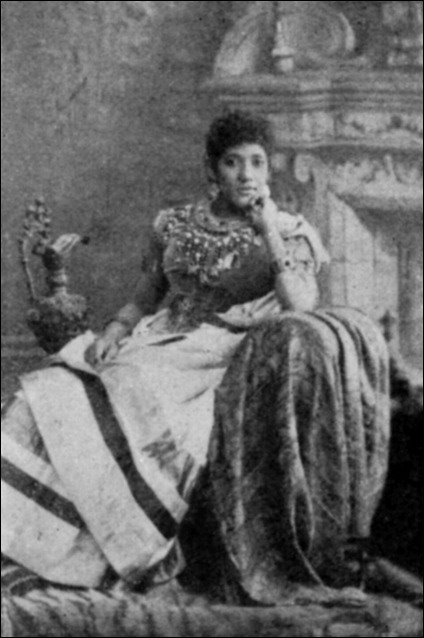
Madame Marie Selika. From Maud Cuney Hare, Negro Musicians and Their Music (1936). Public domain, via Wikimedia Commons.
1889
Social & CulturalJanuary 26, 1889 · The Savannah Tribune137 years ago
World-Renowned Soprano Madame Selika Sings for First Bryan Baptist Benefit
“Madame Selika has a most wonderful control over her voice.”
In 1889 the famous Black soprano Madame Marie Selika was set to sing a benefit for First Bryan Baptist Church, a week after a packed Savannah Theatre cheered her.
Narration0:00
In January 1889, the Savannah Tribune announced that “Madame Selika the great prima donna” would give “a grand concert at Savannah Theatre next Monday night.” The proceeds would benefit the First Bryan Baptist Church, Rev. U. L. Houston, pastor.
Admission was 35 cents, reserved seats 50 cents, the gallery 25 cents. “A full house is anticipated,” the Tribune wrote.
Savannah had already heard her. On Monday night, January 21, the Savannah Theatre was crowded. The audience came “to listen to Madame Marie Selika, the famous prima donna soprano.”
She shared the stage with Miss Hallie Q. Brown, “star elocutionist,” and Mr. S. W. Williams, “Hawaiian baritone soloist.” Prof. A. O. Carter played the piano.
The Tribune’s headline: “Savannah Goes Wild Over The Concert.”
A storm of applause met Selika when she appeared, the paper wrote. She sang Verdi’s “Ah Farse a Lui” “in a manner that elicited the most rupturous applause,” and answered it with “Flowers of the Alps.” Then came the “Echo Song” by Eckhart, “a most difficult piece of music,” and the “Cueko Song.”
“Madame Selika has a most wonderful control over her voice,” the Tribune wrote. “Her fame as a prima dona has been justly earned before the best audiences in this country and Europe.”
Miss Brown recited “The Gypsy Girl” “with the greatest power and pathos.” For her encore, the paper said, she “upset the equimity of the audience by her inimitable lecture on ‘Apples.’” Selika and Williams sang a duet from “Il Trovatore” that “invoked a hearty encore.”
On Friday night, Mr. and Mrs. Andrew E. Robinson gave the three a reception. A large number of “Savannah’s representative people” came “to show their respect and appreciation of the celebrated combination.”
“Mme. Selika and Miss Brown were of course the center of attraction.” The evening was spent “in sparkling conversation and music,” and the Alabama Quartette Club serenaded “the trio of celebrities.”
Background: Selika, born Marie Smith in Natchez, Mississippi, sang at the White House for President Rutherford B. Hayes in 1878. S. W. Williams was her husband, Sampson Williams. (Wikipedia, “Marie Selika Williams”)
As printed
The Savannah Tribune, January 26, 1889, page 3.Read the article
Savannah Theatre.
Madame Selika the great prima donna accompanied bp Mr. S. W. Williams the celebrated Hawaiian baratone soloist and Miss Hallie Q. Brown elocutionist, will give a grand concert at Savannah Theatre next Monday night for the benefit of the First Bryan Baptist Church, Rev. U. L. Houston, pastor. Concert commences at 8:15 o’clock. Admission 35 cents, Reserved seats 50 cents, Gallery 25 cents.
SELIKA’S SUCCESS.
Savannah Goes Wild Over The Concert.
The Theatre was crowded on Monday night last to listen to Madame Marie Selika, the famous prima donna soprano; Miss Hallie Q. Brown, star eloqutionist and Mr. S.W. Williams, Hawaiian baritone soloist. Prof. A. O. Carter, accompainist piano solo, “Theme Alamande” followed by a baritone solo “If Thou Couldst Know,” by Mr. Williams which was admirably rendered; Mr. Williams also sung with good effect “Non-E-Ver” by Mattei.
A storm of applausa greeted the appearance of the celebrated Selika who sung Verdi’s beautiful gem “Ah Farse a Lui” in a manner that elicited the most rupturous applause, in acknowledgement of which she sung the “Flowers of the Alps,” The “Echo Song” by Eckhart, a most difficult piece of music and the “Cueko Song” were rendered in the finest manner possible. Madame Selika has a most wonderful control over her voice which has been fully cultivated under the best teacher’s extant. Her fame as a prima dona has been justly earned before the best audiences in this country and Europe.
The greeting received by Miss Brown was very enthusiastic. The famous elocutionist recited with the greatest power and pathos, “The Gypsy Girl” which was received with the liveliest demonstration of approval. As an encore she upset the equimity of the audience by her inimitable lecture on “Apples” Miss Brown acquitted herself in two other recitations in a manner that showed her elocutionary powers in the highest degree.
The duet from “Il’Trovatore” by Mme. Selika and Mr. Williams was up to the highest standard and invoked a hearty encore.
The company will appear at the Theatre on Monday night for the benefit of the First Bryan Baptist Church. An excellent program has been arranged and a full house is anticipated.
Madame Marie Selika, Miss Hallie Q. Brown and Mr. S. W. Williams were tendered a reception last night by Mr. and Mrs. Andrew E. Robinson, at which a vejy considerable number of Savannah’s representative people were present, to show their respect and appreciation of the celebrated combination. Mme. Selika and Miss Brown were of course the center of attraction and they recognized the compliment paid them with the most charming vivacity. The genial host and his amiable wife were everywhere at once, and seeing that all were served with the good things prepared for the occasion. The evening was spent in sparkling conversation and music occasionaly. During the reception the trio of celebrities were serenaded by the Alabama Quartette Club.
Terms on this page
Prima donna:
the leading woman singer in an opera company.
Elocutionist:
a performer who recites poems and speeches aloud.
Encore:
an extra piece performed because the audience called for more.
“Ah Farse a Lui”:
the Tribune’s spelling of “Ah, fors’è lui,” a soprano aria from Verdi’s opera La Traviata.
“Il Trovatore”:
an opera by Verdi.
Equanimity (printed “equimity”):
calm, composure.
Benefit:
a performance whose proceeds go to a cause, here the church.
Gallery:
the cheapest seats, high in the back of the theatre.
Combination:
a touring company of performers.
Representative people:
leading citizens.
Serenaded:
sung to in honor.
Source
The Savannah Tribune, Saturday, January 26, 1889, p. 3 (“Selika’s Success. Savannah Goes Wild Over The Concert.”; “Savannah Theatre.” notice; and the unheaded reception item, all on the same page)