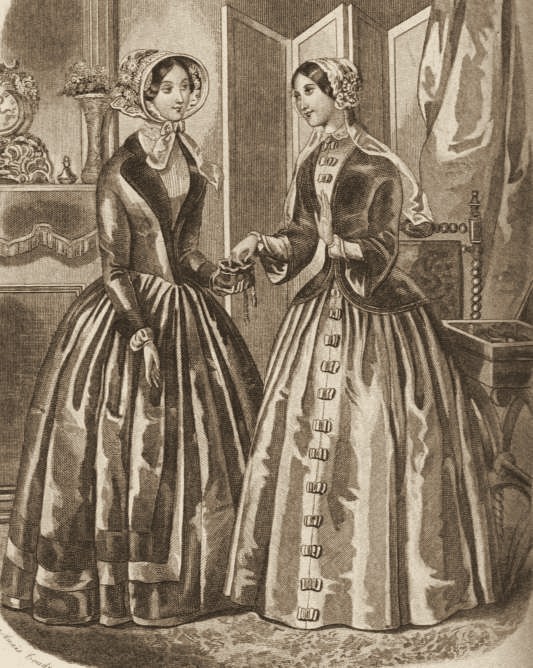
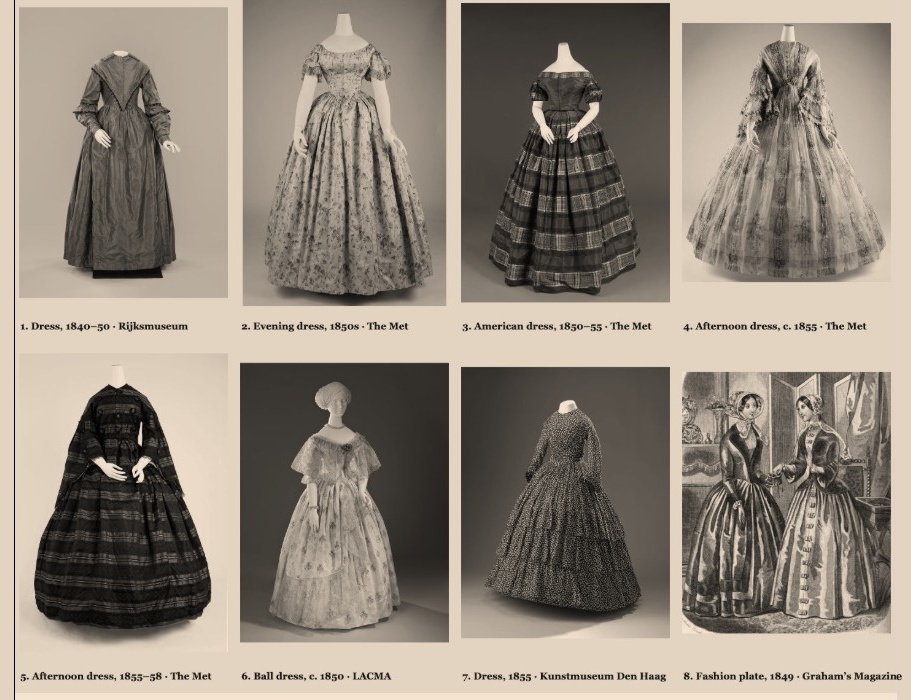
177 years ago.
Black women’s clothes
“This ambition of dress is absolutely a disease.”
On June 6, 1849, the editor of the Savannah Daily Republican turned his column to what Black women in Savannah were wearing.
The turban was “fast disappearing,” he wrote, “too humble.” “The taste for dress and the extravagant gratification of it to which these people are so prone, have also a very demoralizing effect.” Tunics and sacks were in the streets. Little girls wore pantalettes “edged with lace.” His fix: “We must have sumptuary laws.”
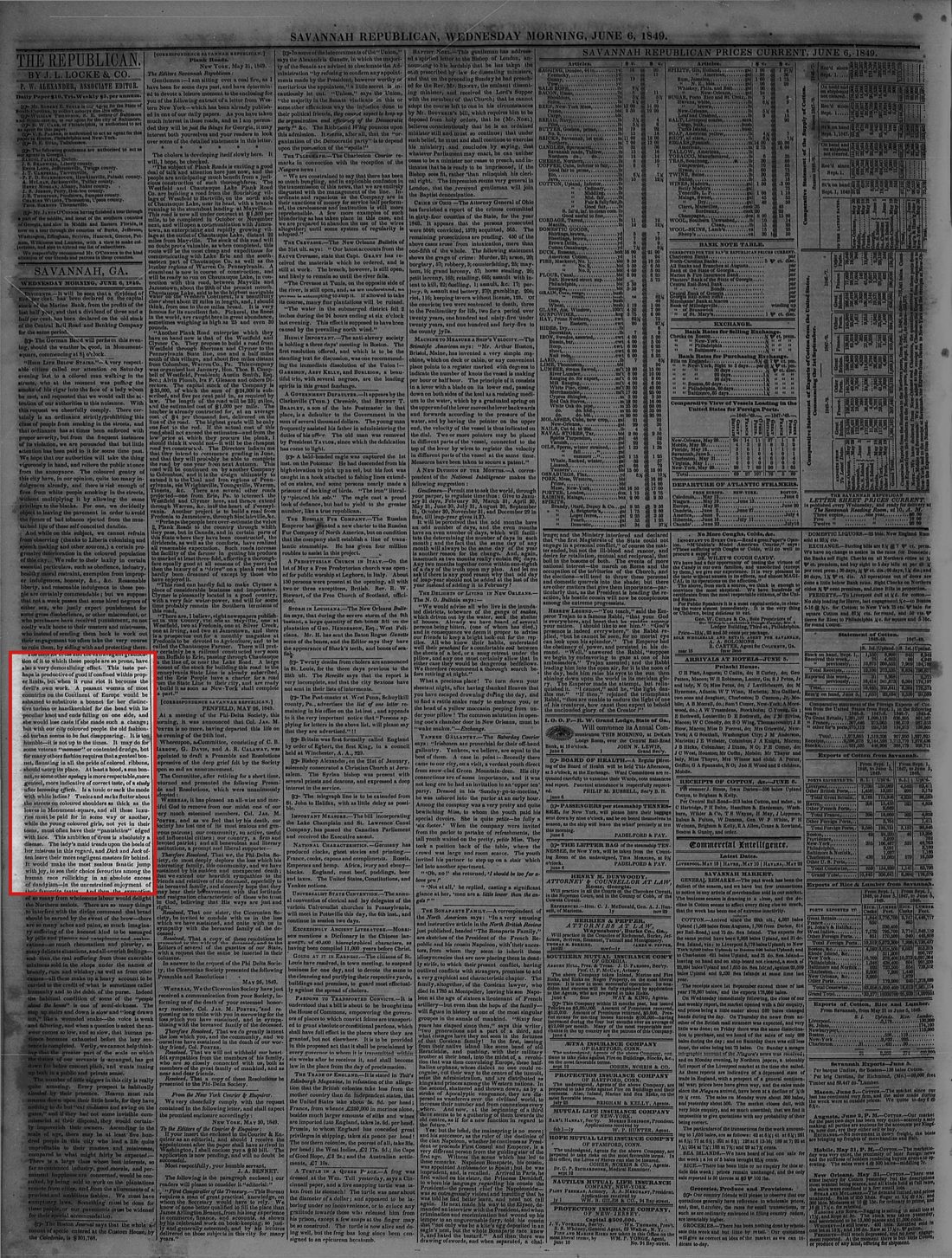
From the newsprint
“The taste for dress and the extravagant gratification of it to which these people are so prone, have also a very demoralizing effect.”
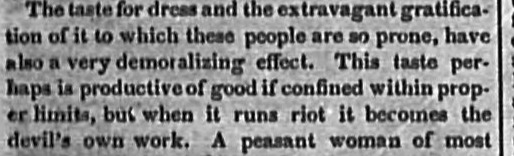
“A peasant woman… would be ashamed to substitute a bonnet for her distinctive turban…”
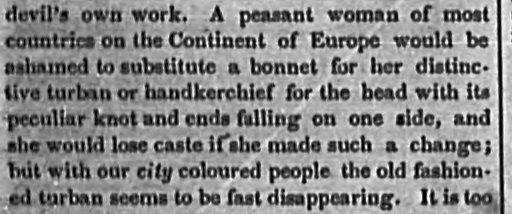
“…but with our city coloured people the old fashioned turban seems to be fast disappearing.”

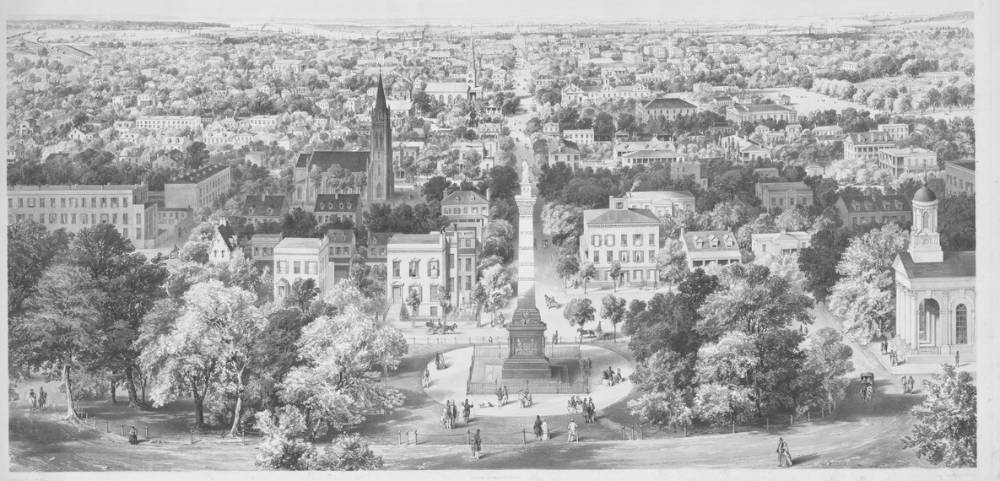
“Is a tunic or sack the mode with white ladies? Tunics and sacks flutter about the streets on coloured shoulders as thick as the leaves in Monument-square…”
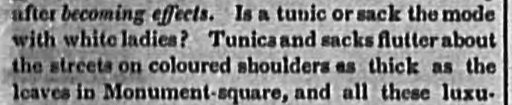
“…the young coloured girls, not yet in their teens, must often have their ‘pantalettes’ edged with lace.”

“This ambition of dress is absolutely a disease.”

“The lady’s maid treads upon the heels of her mistress…”

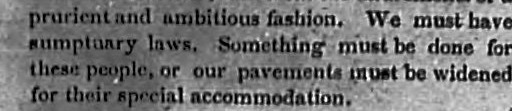
“We must have sumptuary laws.”
Terms on this page
- Sumptuary laws:
- laws limiting what people may wear or buy.
- Sack:
- a loose jacket or coat for women.
- Tunic:
- a long over-blouse worn over a skirt.
- Pantalettes:
- long drawers worn by girls, showing below the skirt.
- Monument-square:
- generally identified with today’s Johnson Square.
Read it in full
The part about clothes, transcribed from the page and checked word by word. Spelling and italics as printed.
The taste for dress and the extravagant gratification of it to which these people are so prone, have also a very demoralizing effect. This taste perhaps is productive of good if confined within proper limits, but when it runs riot it becomes the devil's own work. A peasant woman of most countries on the Continent of Europe would be ashamed to substitute a bonnet for her distinctive turban or handkerchief for the head with its peculiar knot and ends falling on one side, and she would lose caste if she made such a change; but with our city coloured people the old fashioned turban seems to be fast disappearing. It is too humble—it is not up to the times. It may do for some veteran "mommer" or contented drudge, but for many others fashion requires that a genteel bonnet, flaunting in all the pride of colored ribbons, should usurp its place. At least a hood, a sun bonnet, or some other apology is more respectable, more genteel, more indicative of correct taste, of a study after becoming effects. Is a tunic or sack the mode with white ladies? Tunics and sacks flutter about the streets on coloured shoulders as thick as the leaves in Monument-square, and all these luxuries must be paid for in some way or another, while the young coloured girls, not yet in their teens, must often have their "pantalettes" edged with lace. This ambition of dress is absolutely a disease. The lady's maid treads upon the heels of her mistress in this regard, and Dick and Jack often leave their more negligent masters far behind.
[…] Near the end of the column: “…from the allurements of a prurient and ambitious fashion. We must have sumptuary laws.”
The same editorial also complained about Black men smoking cigars in the street, and said “a large class” would be better off “sold to work on the plantations.” Read the whole editorial →
Source
“High Life Below Stairs,” Savannah Daily Republican, June 6, 1849, p. 2, col. 1. Georgia Historic Newspapers, Digital Library of Georgia.