Black people going back to Africa
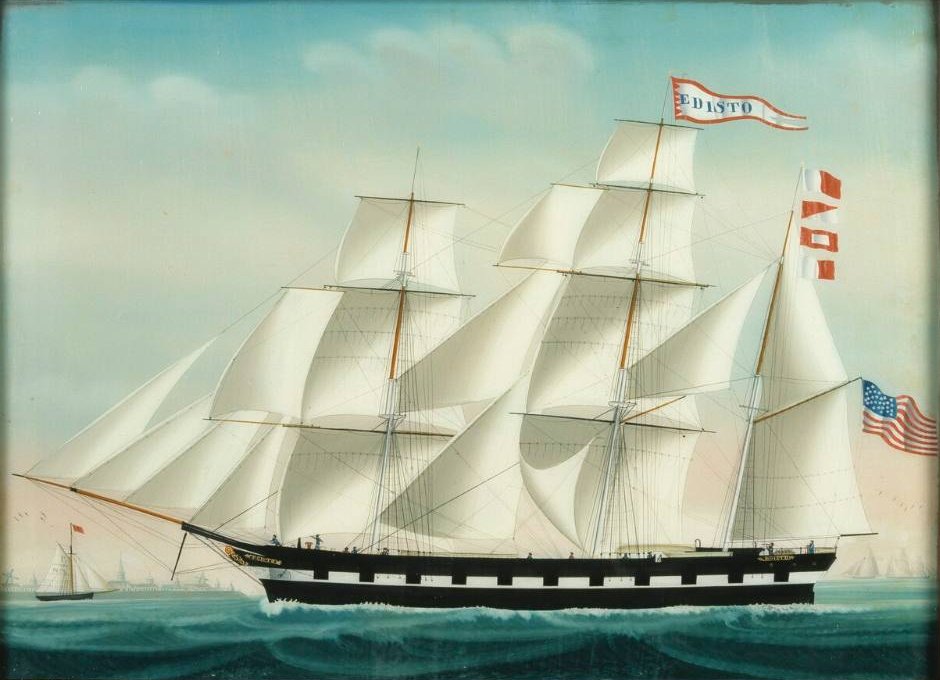
They bought their freedom, packed their trunks and sailed for Africa. Savannah’s newspaper wanted it stopped.
Thousands crowded the wharf. A pastor said goodbye to his congregation. A band played “Yankee Doodle.” Three days later, the paper printed an editorial and a letter demanding it never happen again.
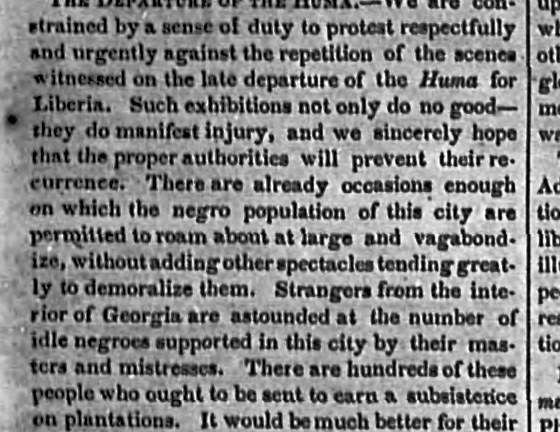
“Such exhibitions not only do no good—they do manifest injury.”
More from the papers
Black women’s clothes
“This ambition of dress is absolutely a disease.”
“…the old fashioned turban seems to be fast disappearing.”

Savannah’s newspaper, June 6, 1849, on what Black women were wearing: turbans, bonnets, tunics, sacks and lace.
See what he wrote →Black people’s cigars and clothes, and a call to sell them to the plantations
A Black man smoked a cigar on a Savannah street. The editor’s answer: sell “a large class” to the plantations.
“…would be consulted, by being sold to work on the plantations remote from cities.”
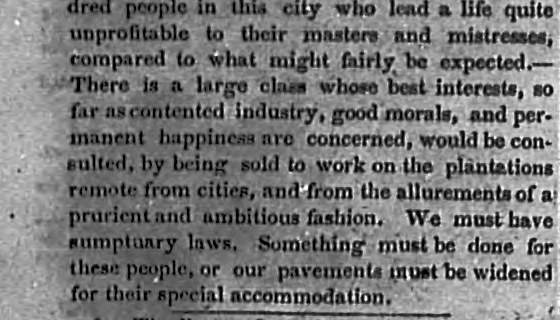
It started with one man’s cigar on a Saturday evening. Four days later the editor wrote that “a large class” of Black Savannahians should be “sold to work on the plantations.”
See what he wrote →Negroes and alcohol
A grand jury found Savannah’s “negro Grogeries” flourishing. It called that “alarming and deplorable.”
“…ought not to be tolerated.”
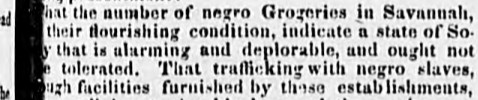
Trade with enslaved people. Midnight raids on the river. And a last request: keep grog-shop owners off the city’s night watch.
Read the presentment →